Park Street Transit Signal Priority & Signal Optimization Project
Project Description
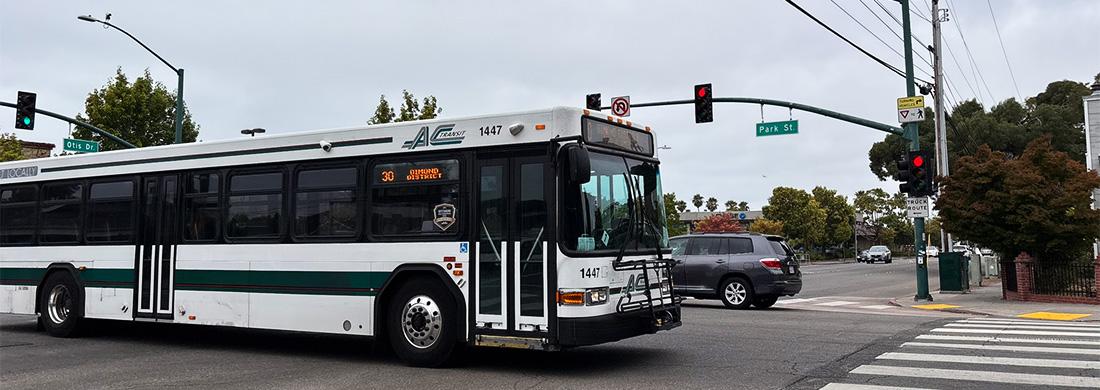
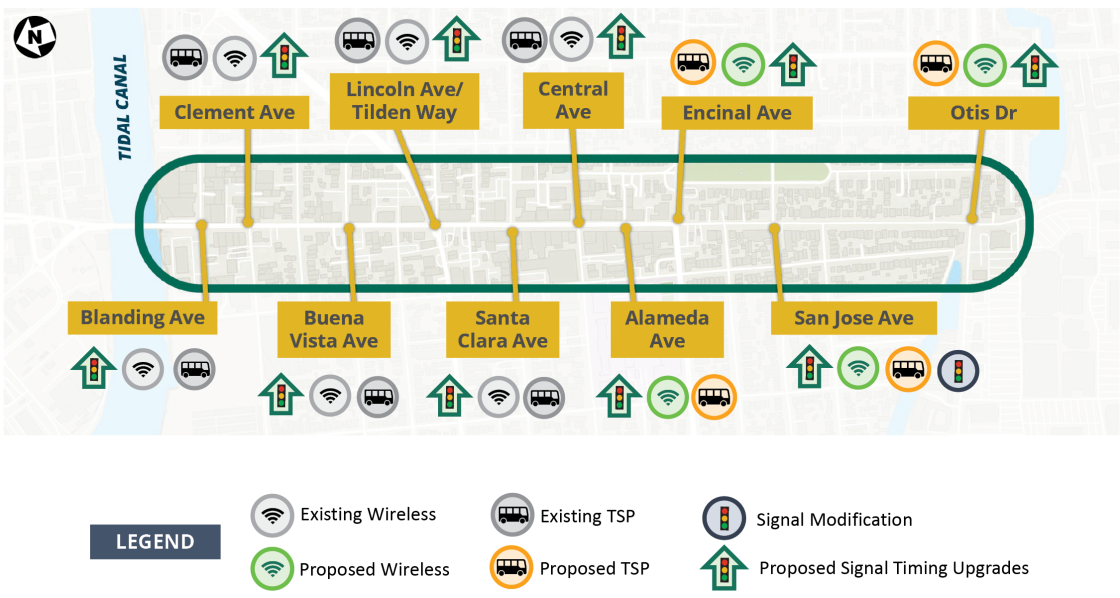
Park Street is a 1.5-mile-long corridor in the City of Alameda and is one of AC Transit’s twelve major corridors identified in the Major Corridors Study (2016). The City previously implemented Transit Signal Priority (TSP) on a segment of Park Street between Blanding Avenue and Central Avenue. This project seeks to extend the TSP network to the intersections at Alameda Avenue, Encinal Avenue (State Route 61), San Jose Avenue, and Otis Drive. The project will also update signal coordination at all ten traffic signals on Park Street, between Blanding Avenue and Otis Drive. The intersection of Park Street and Encinal Avenue/SR-61 is located within Caltrans right-of-way, while the remaining nine intersections are in the City of Alameda right-of-way. The Park Street TSP & Signal Optimization Project is fully funded by the Metropolitan Transportation Commission (MTC) Bus Accelerated Infrastructure Delivery (BusAID) Program. The BusAID program is an initiative that reduces transit travel times, improves transit reliability, and emphasizes short-term, quick-build solutions at pinch-point locations identified by transit operators.
Key Project Elements
The project includes three elements
- Installation of new TSP equipment at four intersections and closing the TSP network gap on the project corridor.
- In some locations, there is existing TSP equipment in place that needs to be upgraded. Throughout the project, GPS/radio TSP technology will be newly installed or upgraded. Additionally, this project will update and optimize signal timing coordination at 10 intersections along Park Street to provide more efficient transit and traffic operations.
- Replacement of an old and outdated traffic signal controller, cabinet, and conduits at the intersection of Park Street and San Jose Avenue.
Project Schedule
Project Design is anticipated to be complete by Early 2026, with construction expected to be completed in Fall 2026.
Contact Information
- Email: planning@actransit.org
- Phone: (510) 891-7262
- Mail: AC Transit, 1600 Franklin Street Oakland, CA 94612
Frequently Asked Questions
What is Transit Signal Priority and how does it work?
Transit Signal Priority (TSP) is a technology that adjusts the timing of traffic signals to prioritize the movement of transit vehicles. TSP helps reduce delays, and improve efficiency and reliability for transit, helping transit better serve the community.
When a transit vehicle approaches a signalized intersection, the TSP system will request additional green light time from the traffic signal controller using GPS/radio technology. Once the request is received by the traffic signal, the signal may grant additional seconds of green light. While TSP prioritizes transit vehicles, it is designed to minimize the impact on regular vehicular traffic. A requested early or extended green light is only granted by the controller if there is available time to “take” from other approaches due to the lack of side street traffic.
Why are improvements needed on Park Street?
Park Street is one of AC Transit’s eleven major corridors identified in the 2016 Major Corridors Study and serves important lines for the City of Alameda, including the newly circulating Lines 30 and 31. Implementing TSP will help reduce delays for transit vehicles and provide more reliable service for the community. Six of the ten intersections on Park Street already have TSP technology in place, and this project will expand the system to the remaining four intersections. The project will also reevaluate the signal timing to optimize movement of pedestrians, bicycles, buses and vehicles on Park Street.
How will TSP benefit the community?
TSP will benefit the community by reducing travel times for transit riders and by making public transportation more reliable and efficient. TSP and signal optimization can encourage more people to use public transit, thereby reducing the number of vehicles on the road, decreasing traffic congestion and travel times along the corridor, and promoting a more sustainable and environmentally friendly way of getting around.
How is this project being funded?
The Park Street TSP and Signal Optimization Project is funded by the Metropolitan Transportation Commission (MTC) Bus Accelerated Infrastructure Delivery (BusAID) Program.
For more information on BusAID, navigate to this link.
Was there any community outreach about this project?
In addition to the publicized project website and fact sheet, community outreach and engagement will be ongoing. Currently, a public presentation is scheduled for January 28, 2026, at the City of Alameda Transportation Commission with time for questions and community input. All materials will be posted to the AC Transit project webpage and will be translated into Spanish and Chinese. City of Alameda staff have been engaged since the beginning of the project.
AC Transit will continue to provide project updates to the city at the periodic AC Transit Inter-Agency Liaison Committee meetings. The next one is scheduled for February 12, 2026. Additionally, the project webpage will continually be updated to reflect project updates and the future construction schedule.
How long will construction take?
The design phase of the TSP project will be completed by early 2026, and construction is expected to be completed by Fall 2026, with construction lasting approximately 3 months. The active installation of signal equipment, which may involve temporary lane or sidewalk closures, is likely to occur over a one-month period. The remainder of the construction timeline will focus on programming and updating signal timing.
Minor traffic delays are anticipated along Park Street and intersecting streets during the specified lane closures. These closures are scheduled to occur only on weekdays from 8:30 am-3:30 pm and will avoid the morning and evening commute hours to reduce inconvenience for travelers. Nighttime lane closures are not permitted as part of this project.
Generally, construction will occur at one intersection at a time to limit the number of impacts during construction.
Will there be any road closures or detours during project implementation?
During the installation and configuration of the wireless communication and Transit Signal Priority (TSP) antenna equipment, contractors will utilize bucket trucks to work on the traffic signal poles. As a result, there will be half-day lane closures required while this overhead work is being performed. Importantly, traffic will be maintained for all directions, and all affected lanes will be reopened at the end of each workday to minimize disruption.
At the intersection of San Jose Avenue and Park Street, closures of lanes and sidewalks are needed to complete cabinet foundation and underground conduit work. Traffic will be maintained for all roadway approaches, though flaggers may be used under alternating traffic conditions. For sidewalk closures, an accessible detour route for pedestrians will be provided to ensure safety and accessibility around the work area.
Additionally, to support these construction activities, there may be temporary "No Parking" restrictions and bus stop relocations implemented in certain locations. Restrictions and relocations are anticipated to be approximately 24 hours.
For construction at the San Jose Avenue intersection, the traffic signal will be temporarily switched to red flashing/stop-controlled mode to facilitate the changeover to the new signal controller cabinet.
Will the project affect bus stop locations or parking?
To support these construction activities, there may be temporary "No Parking" restrictions and bus stop relocations implemented in certain locations. Restrictions and relocations are anticipated to be approximately 24 hours.
Will the transit signal priority affect emergency vehicles?
TSP does not affect emergency vehicles. Emergency vehicles are always given priority in signal operations.
How can I provide my comments about the project?
Please send your comments to planning@actransit.org or by phone at 510- 891-7262 or by postal mail to AC Transit, 1600 Franklin Street, 7th Floor, Oakland, CA 94612. You can also stay informed about the project by visiting the project website which will be continually updated throughout the duration of the project.
Is there TSP currently implemented in the City of Alameda and how has it affected travel times for road users?
Other than the existing TSP on Park Street between Blanding Avenue and Central Avenue, in 2016, AC Transit's Line 51 project installed TSP on Webster Street between Central Avenue and the Posey Tube. A post-project study for the Line 51 improvements found that Webster travel times in the commute direction decreased by an average of 28%, demonstrating benefits to both transit and general traffic.